Dining Table Things: Complete Accessories Checklist
TL;DR: The dining table things every Indian home actually needs fall into four groups: protection layers, serving pieces, everyday tableware and lighting. Buy the protection layer first, because it determines how long the table itself survives.
People search for dining table things when they have bought the table and realised it is only half the job. The surface is there. Everything that makes it usable is not.
This is the practical checklist, ordered by what to buy first rather than by category.
Dining Table Things: The Protection Layer
Buy this before anything decorative. It is what keeps a marble or wooden top looking new for a decade.
The dining table things Indian homes actually need, ordered by priority. Protection layers, serving pieces, tableware, lighting and what is safe to skip.
- Placemats: the single most important purchase. Cork or felt-backed, one per seat, plus two spares.
- Coasters: essential on marble, which stains from condensation rings faster than most buyers expect.
- Trivets: heat-resistant pads for serving dishes. Marble and glass crack under direct hot vessels.
- Table runner or cloth: covers the centre span where serving dishes land most often.
- Felt pads: stick under any decorative object that sits permanently on the surface.
Among all dining table things, the trivet is the one most commonly skipped and most expensive to skip. A single hot vessel placed directly on a marble top can cause a thermal crack.
Table Accessories for Everyday Indian Dining
Indian meals place different demands on table accessories than Western place settings do.
Serving happens at the table, so you need more centre space than a European setting assumes. Multiple curry bowls, a rice dish and rotis all land in the middle simultaneously.
- Serving stand or tiered rack: lifts one dish off the surface and frees space.
- Roti box or casserole: insulated, sized for the household. This is standard in Indian homes and rarely in imported sets.
- Condiment tray: keeps pickles, salt and chutneys grouped rather than scattered.
- Napkin holder: weighted, so it does not move when reached across.
Choose table accessories that can stay on the table permanently. Anything you must clear before every meal will eventually live in a cupboard instead.
Dining Essentials: What Actually Gets Used
Buyers routinely over-purchase here. The dining essentials that earn their place are fewer than most sets contain.
Count your realistic maximum seating, then add two. A six-seater household needs eight of each item, not twelve.
Buy dinner plates, quarter plates, katoris and glasses in that count. Skip the specialised pieces most sets include, such as soup bowls and dessert plates, unless you genuinely serve those courses.
Dining essentials should survive daily washing. Test that everything is dishwasher-safe if you own one, because hand-wash-only items get used less and less over time.
Choosing Tableware That Suits Your Table Top
The tableware you choose should respond to the surface underneath it, not fight with it.
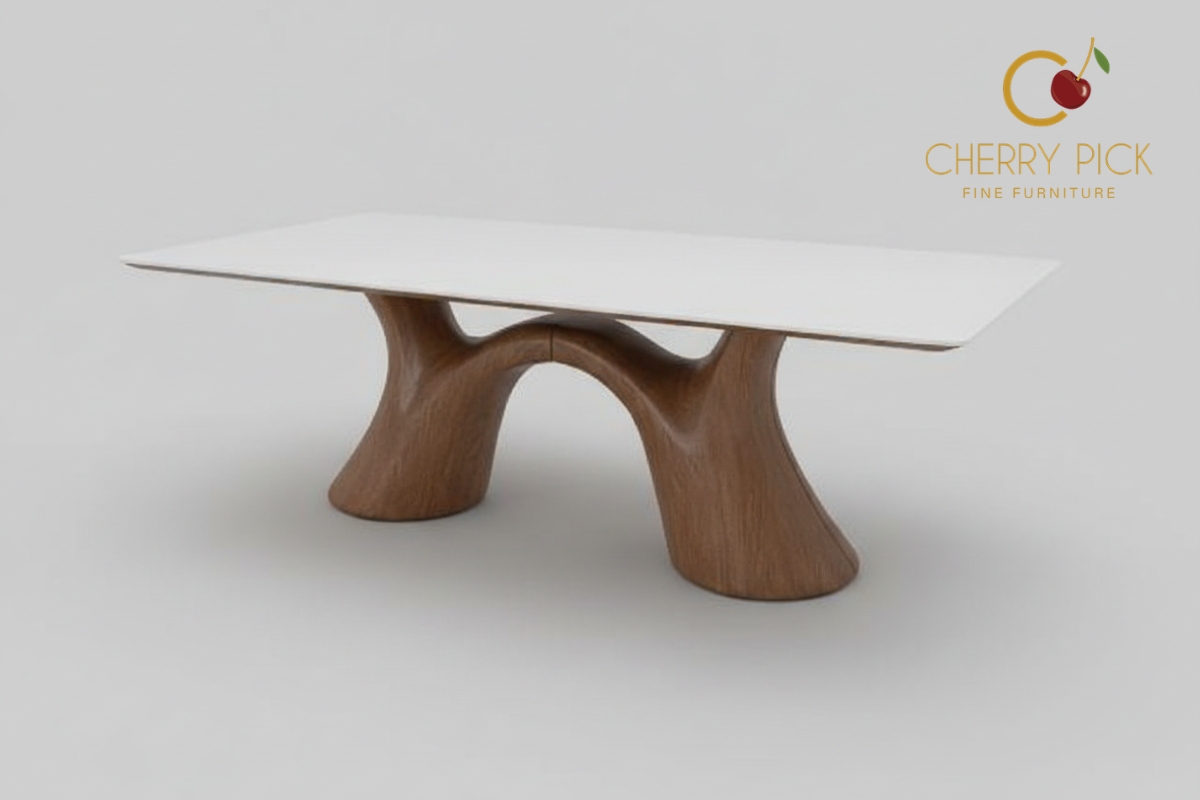
On a marble top, matte ceramic reads better than high gloss, which competes with the stone’s own sheen. On dark wood, lighter tableware creates the contrast that makes a table setting legible.
Weight matters practically. Very light tableware slides on polished marble. Heavier stoneware stays put and feels more substantial in the hand.
Avoid metal bases that drag across stone. If you use brass or steel serveware, it needs a felt base or a permanent trivet underneath.
What Should a Complete Dining Setup Include?
A complete dining setup is the table, the protection layer, the serving pieces, the tableware and the light above it.
Lighting is the element most often forgotten. A pendant should hang 75-90 cm above the table surface, and its width should be roughly half to two-thirds the table width.
Chairs count as part of the dining setup too. Allow 60 cm of table edge per person, and 90 cm of clearance behind each chair for pulling out.
Together those measurements determine whether the room works, and no amount of accessories fixes a table that is too large for its space.
What to Skip
Not everything sold as dining table things deserves a place on yours.
- Full formal cutlery canteens: most Indian households use a fraction of the pieces.
- Glass lazy susans on marble: they scratch the surface unless felt-based.
- Tall centrepieces: anything above 30 cm blocks sightlines across the table.
- Matching everything: a fully matched set looks like a showroom rather than a home.
For context on how place settings are conventionally arranged, the table setting conventions are a useful starting reference.
Matching Accessories to Your Table
Start from the table material and work outward. A marble top wants restrained accessories. A carved wooden table can carry more.
Browse table formats in the dining table collection and seating in the dining chairs range, or read our guide to dining table top materials before choosing accessories.