Metal Dining Table with Chairs: Industrial Style Guide
TL;DR: A metal dining table pairs a steel or iron base with a wood, stone or glass top. It suits industrial and contemporary interiors, carries heavier tops than timber bases, and needs powder coating to survive Indian humidity.
The metal dining table has moved from warehouse conversions into mainstream Indian homes, largely because a slim metal base frees legroom that a bulky wooden one consumes.
This guide covers base types, top pairings, finish durability and what to check before buying.
Why Choose a Metal Dining Table with Chairs?
The structural argument is straightforward. Steel carries more load per unit of cross-section than timber.
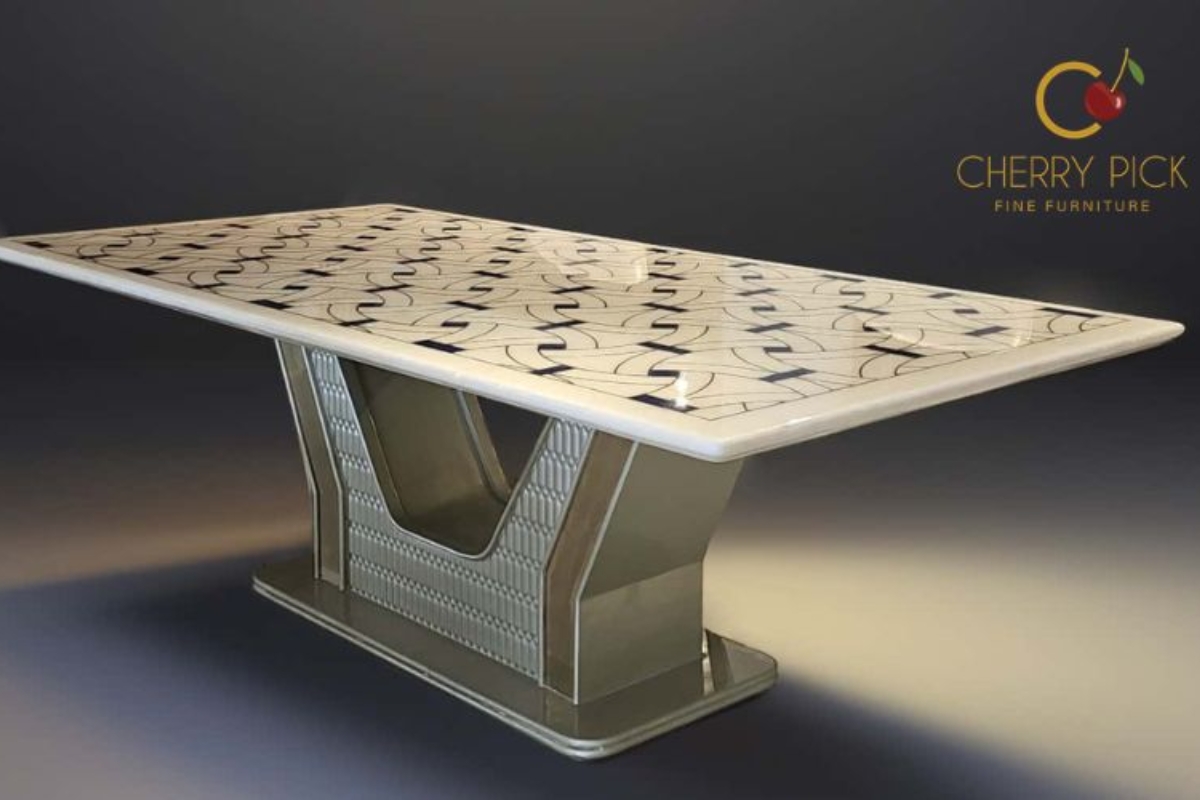
A metal dining table carries heavy stone tops on a slim base. Compare base types, top pairings, powder-coat finishes for Indian humidity and buying checks.
That means a metal dining table can support a heavy marble or granite top on a visually slim base, where a wooden base would need bulk to do the same job.
The practical benefit is legroom. A slim four-leg steel frame or a single pedestal leaves far more usable space under the table than a thick timber apron and legs.
Buying the table with chairs as a matched set also solves proportion, because the chair frame is designed against the base visually.
Base Types Compared
The base determines both the look and how many people genuinely fit.
- Four-leg frame: most stable, but legs at the corners limit where chairs can be placed.
- Trestle or A-frame: two end supports, leaving the long sides completely clear.
- Single pedestal: maximum legroom and seating flexibility, needs a heavy foot for stability.
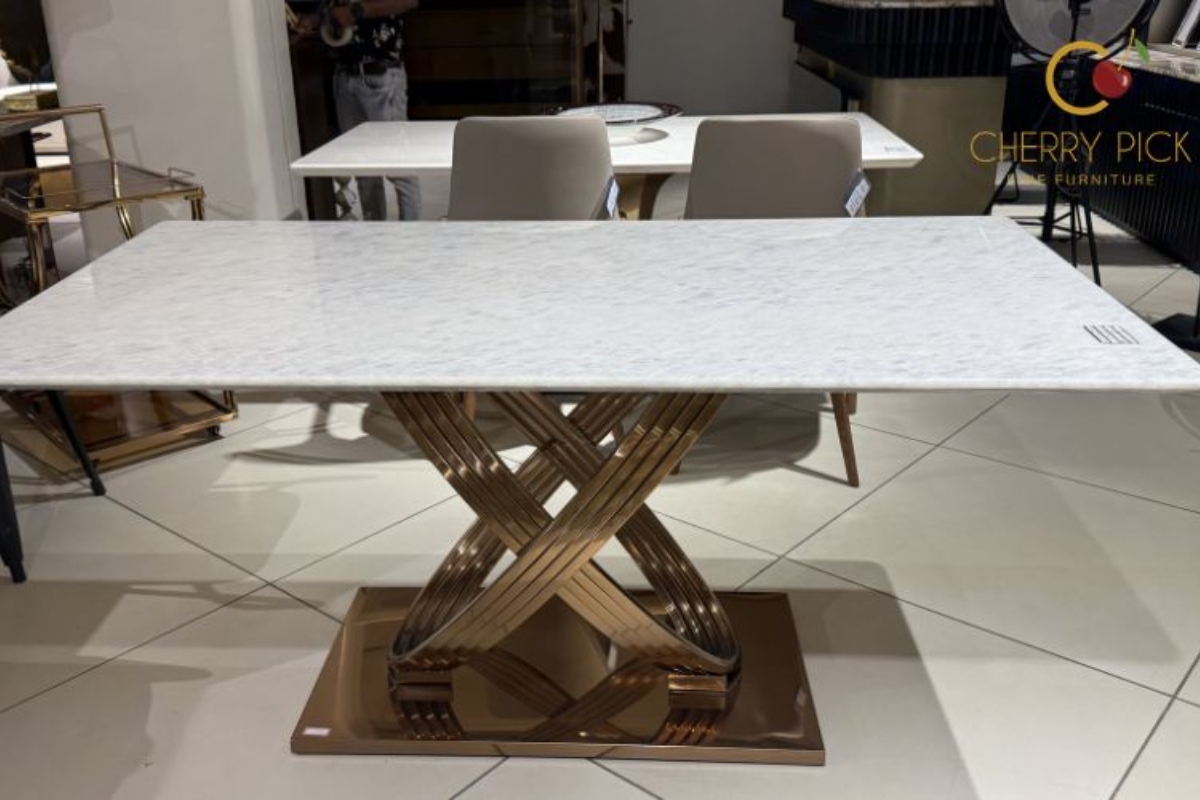
- Cross or X base: a metal base table style that suits round and square tops particularly well.
For seating more people than the nominal count, a trestle or pedestal metal base table wins, because nobody is straddling a leg.
Top Pairings for Industrial Dining
The top does most of the visual work. The same base reads very differently depending on what sits on it.
Reclaimed or distressed wood gives the classic industrial dining look, warm against cold steel. Solid mango and acacia are widely available in India and take a distressed finish well.
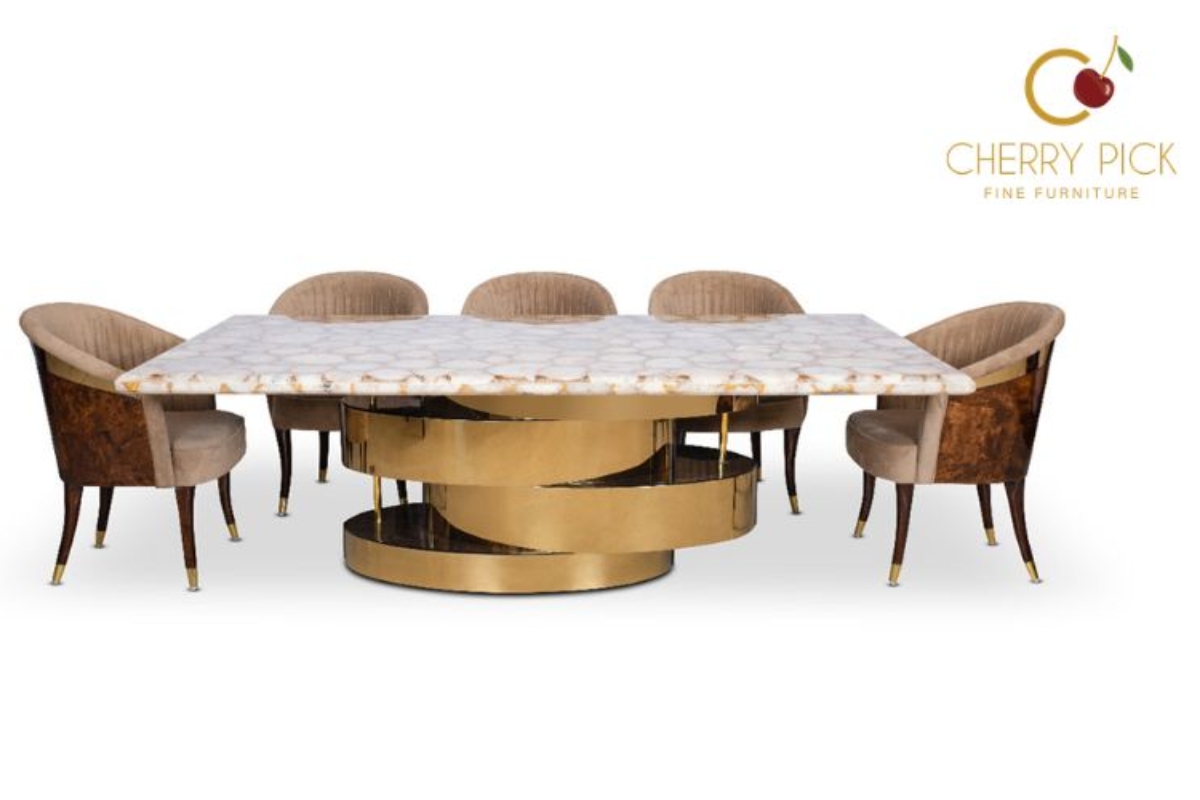
Marble or engineered stone shifts the piece from industrial dining toward contemporary luxury. The contrast between a raw base and a polished top is what makes it work.
Glass tops keep a small room feeling open, but show every fingerprint and need a thicker section, usually 12 mm, when supported on a metal frame.
Metal Furniture Finishes and Indian Humidity
This is where metal furniture buyers get caught, particularly in coastal and monsoon-heavy regions.
- Powder coating: the durable standard. Baked-on finish that resists chipping and moisture.
- Electroplating: attractive on chrome and brass tones, but vulnerable at joints and edges.
- Raw or waxed steel: the true industrial look, but it will develop surface rust in humid conditions.
- Stainless steel: most resistant, most expensive, and limited in available finishes.
For Bangalore’s monsoon, specify powder-coated metal furniture. Raw steel looks correct for about one rainy season, then requires active maintenance to stay presentable.
Is a Metal Dining Table Right for Contemporary Dining?
It fits contemporary dining schemes well, provided the rest of the room has something soft to balance it.
A metal base against a tiled floor and hard walls creates an acoustically bright room where conversation echoes. A rug under the table solves this almost entirely.
Contemporary dining also tolerates mixed materials better than traditional schemes. Pairing a metal base with upholstered chairs rather than matching metal ones softens the combination considerably.
If the room already reads industrial through exposed concrete or brick, consider a wooden top to prevent the scheme becoming relentlessly hard.
What to Check Before Buying
Four checks catch most problems with metal-based tables.
- Weld quality: welds should be ground smooth and evenly coated, not lumpy or bare.
- Levelling feet: adjustable feet are essential, since metal bases do not flex on uneven floors.
- Top attachment: the top should bolt to the base, not rest on it with adhesive pads alone.
- Floor protection: confirm felt or rubber pads are fitted, as bare metal scratches vitrified tile instantly.
Background on the finishing process is covered well under powder coating.
Sizing and Selection
Allow 60 cm of table edge per person, and check that the base position does not fall where a chair needs to sit.
Compare base and top combinations in the dining table collection and the dining chairs range, or read our guide to dining table top materials before choosing.