Central Table Design: Focal Point Furniture Selection
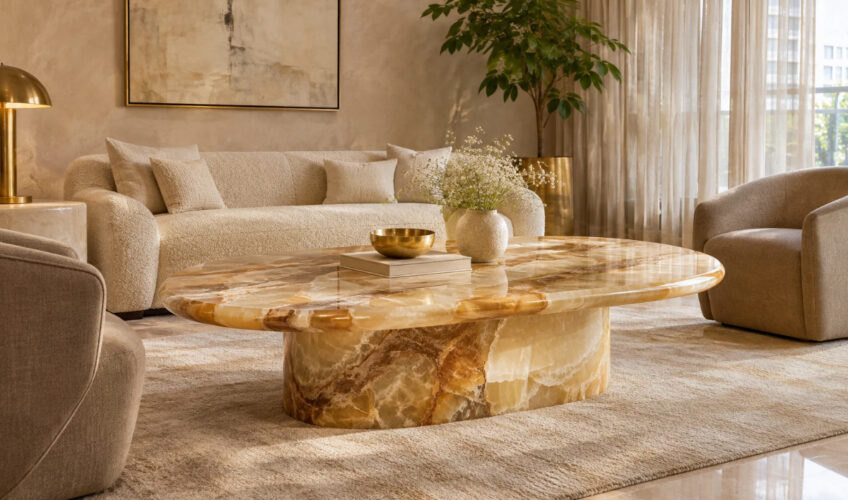
TL;DR: A central table becomes the room’s focal point when it contrasts with everything around it in material, shape or mass. Choose one point of contrast, not three, and let the surrounding furniture stay quiet.
Every living room has a focal point whether it was planned or not. When there is no fireplace and the television is mounted flat, the central table usually inherits the role.
Choosing it deliberately produces a room that looks designed. Choosing it as an afterthought produces a room that looks furnished.
When Should a Central Table Be the Focal Point?
Not always. A central table should carry the room only when nothing else is competing for the job.
A central table earns focal point status through one point of contrast. Material comparison, lighting and sightline rules, plus how to scale it to a room.
- No fireplace or feature wall: the table has an opening to take the role.
- Neutral sofa: a plain seating scheme leaves visual room for a strong table.
- Symmetrical seating: two sofas facing each other naturally centre attention between them.
- Open-plan zone: the table anchors a seating group where walls do not.
If the room already has a statement rug, a gallery wall and a bold sofa, a dramatic central table becomes the fourth competing element and the room loses coherence.
Statement Furniture: One Point of Contrast
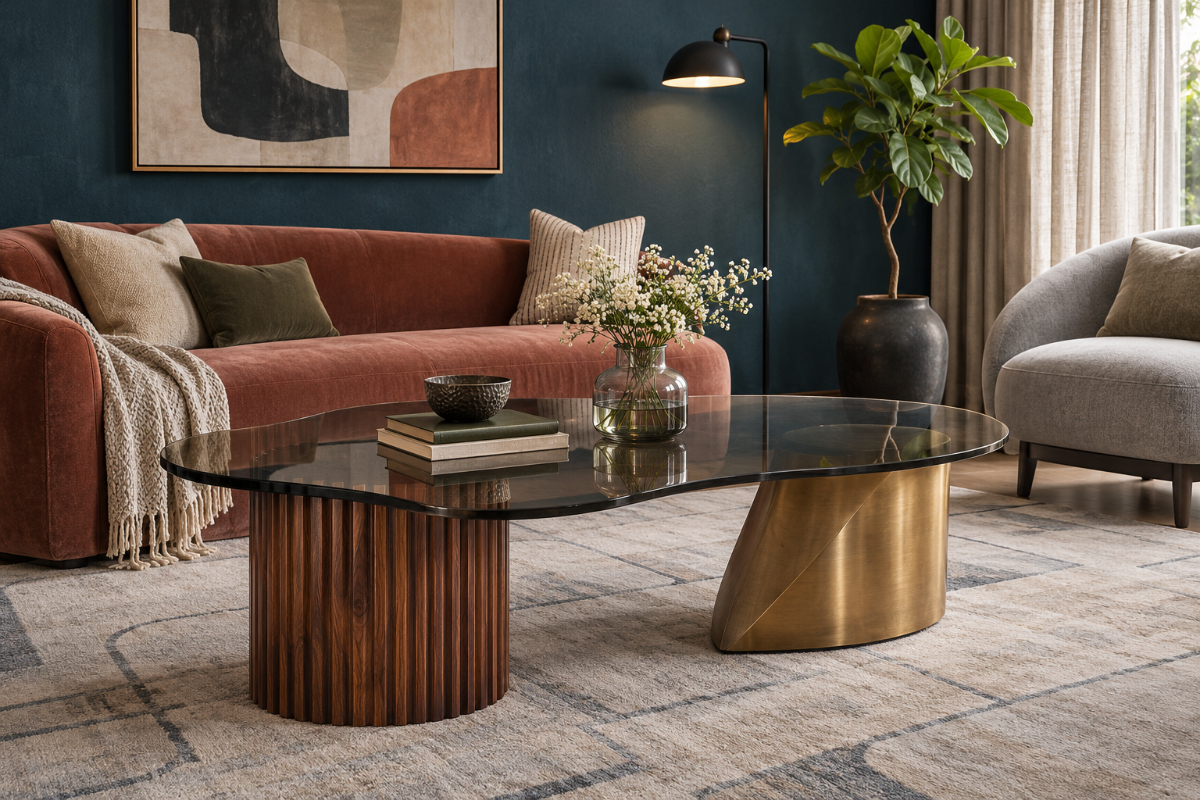
Statement furniture works through contrast, and the discipline lies in choosing only one kind.
Material contrast is the most reliable. A stone or onyx top against upholstered seating reads as deliberate because the materials are genuinely different.
Shape contrast works in rooms full of rectangles. A round or organic table in a room of straight lines draws the eye without needing an unusual material.
Mass contrast is the subtlest. A visually heavy solid base among slim-legged furniture anchors a room that otherwise feels like it is floating.
Pick one. Statement furniture that contrasts in material, shape and mass simultaneously stops reading as a focal point and starts reading as noise.
Room Centerpiece Materials Compared
The material does most of the work in making a table the room centerpiece.
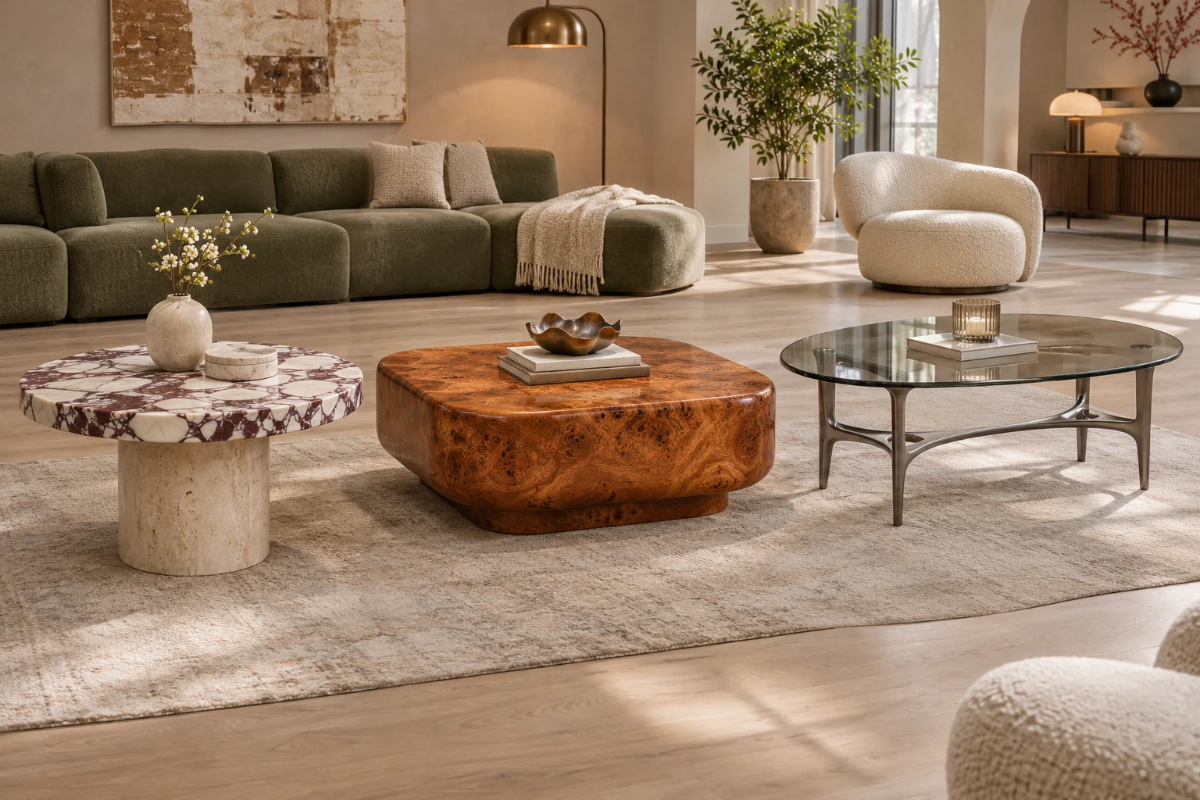
- Marble and onyx: natural veining means no two pieces match. The strongest room centerpiece material.
- Solid wood burl: dramatic grain, warmer than stone, and forgiving of daily use.
- Metal and glass: visually light, suits small rooms where mass would overwhelm.
- Sculptural composite: allows shapes stone and timber cannot achieve structurally.
Onyx deserves particular mention as a room centerpiece, because backlit onyx changes appearance entirely between daylight and evening.
Making the Focal Point Work in the Room
A focal point needs supporting conditions, not just a strong object.
Lighting is the first. A table intended as the focal point should have light falling on it, whether from a pendant, a floor lamp or a window.
Negative space is the second. Leave the surrounding floor relatively clear, since a focal point crowded by side tables and plant pots stops functioning as one.
Sightline is the third. The table should be visible from the room’s entrance. A focal point you only see after sitting down is not doing its job.
Scaling Luxury Tables to the Room
The most common failure with luxury tables is scale rather than style.
A dramatic piece needs room around it to register. In a 3 m room, a heavy stone table fills the space rather than commanding it.
Keep the two-thirds rule even for statement pieces. Luxury tables that exceed the sofa’s length look imposed on the room rather than designed into it.
For smaller rooms, achieve presence through material rather than size. A compact onyx or burl-wood piece delivers impact that a large plain table cannot.
What to Put on It
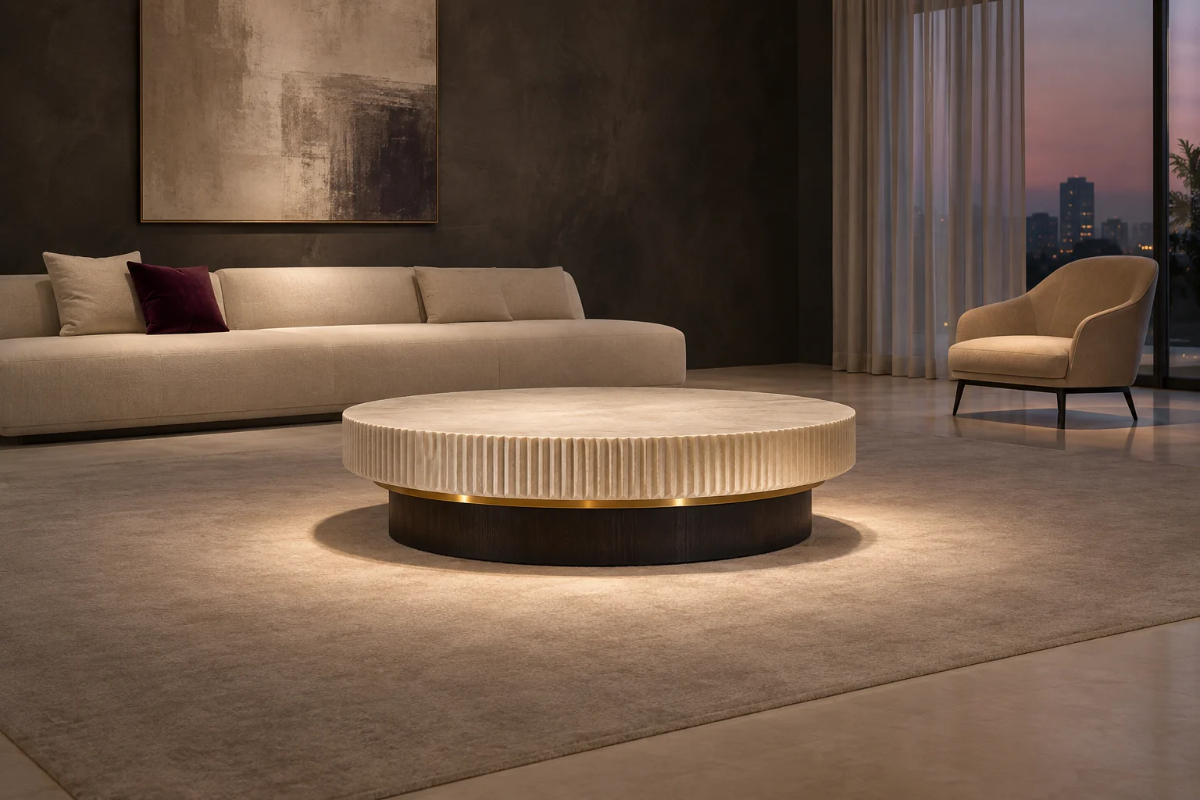
A central table serving as focal point needs very little styling, because the object itself is the statement.
One tray, one low object and nothing else. Three items maximum, all under 25 cm tall.
Where the top has strong veining or grain, leave most of it visible. Covering a marble surface with objects defeats the reason for choosing it.
Browse materials in the centre table collection and the living room furniture range, or read our guide to trending centre table designs. The wider principle is covered under focal point in interior design.

