Kitchen Center Table: Why It’s Different from Living Room Tables
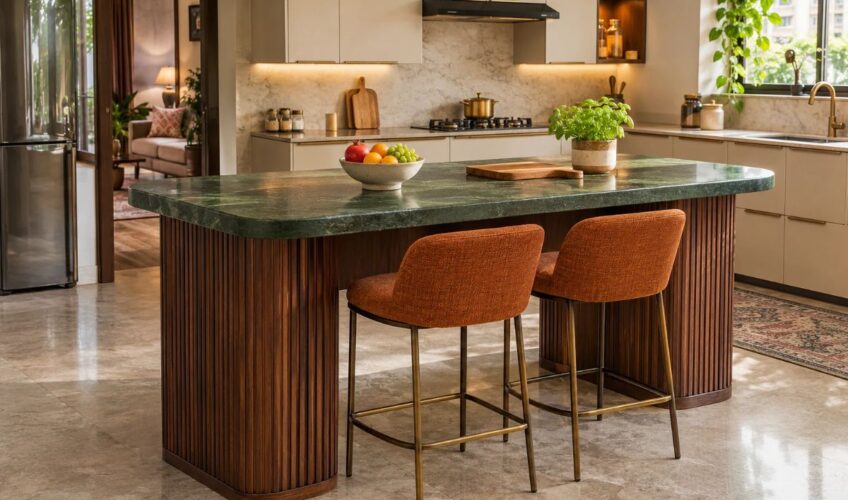
TL;DR: A kitchen center table is a freestanding work surface that sits in the middle of the kitchen. It suits Indian kitchens better than a fixed island because it can be moved, costs a fraction as much, and needs no plumbing or wiring.
The kitchen center table solves a problem most Indian kitchens have: counter space runs out during prep, but there is no budget or plumbing route for a built-in island.
A freestanding table in the middle of the room delivers most of the benefit at a fraction of the cost and commitment.
What Is a Kitchen Center Table?
It is a freestanding table, usually 85-92 cm high, placed in the open floor area of a kitchen.
A kitchen center table gives island benefits without plumbing or carpentry. Sizing, clearances, prep-safe top materials and seating overhang explained.
Unlike a built-in island it is not plumbed, not wired, and not fixed to the floor. It can be repositioned, removed during a renovation, or taken along when you move.
The height distinguishes it from a dining table. This piece sits at counter height so you can chop standing up without bending.
Kitchen Island Alternative: Why It Often Wins
A built-in island requires floor area, plumbing routes if it carries a sink, electrical points, and a minimum room width of 3.5 m.
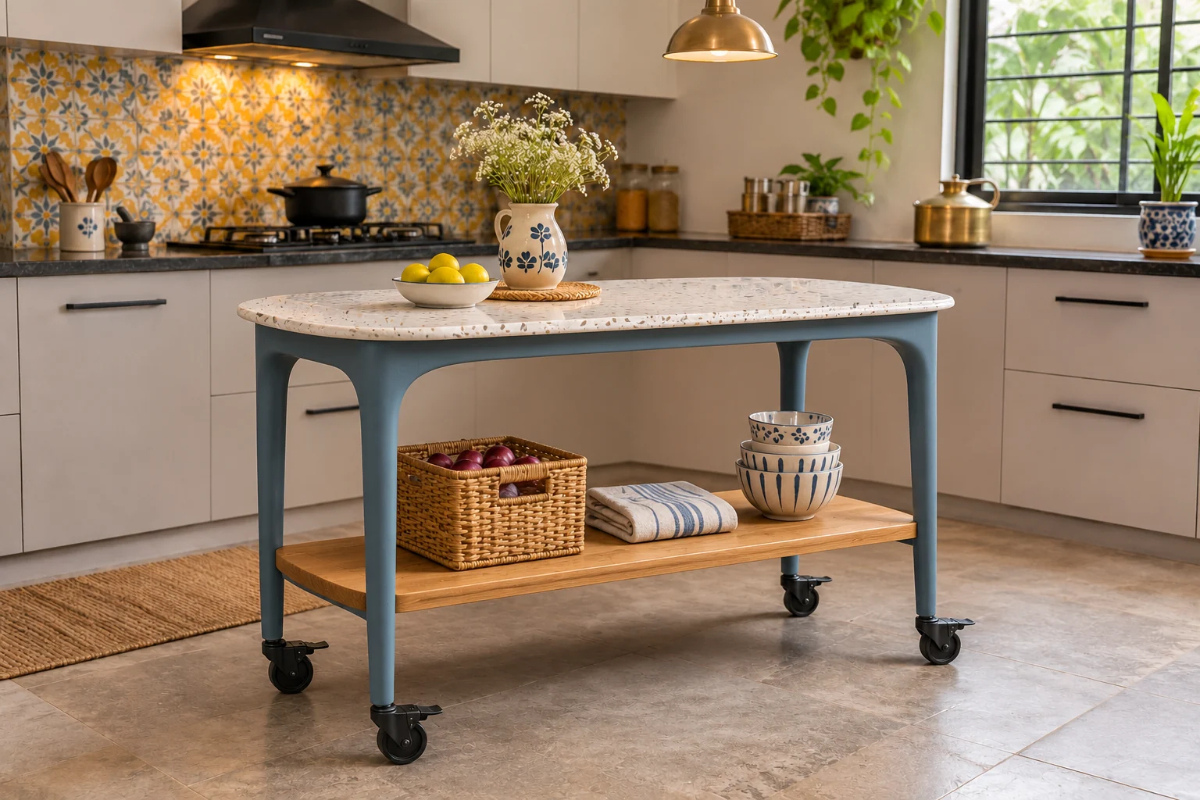
A kitchen island alternative in table form requires only the floor area. That single difference makes it viable in a large proportion of Indian kitchens where an island simply is not.
- Cost: a fraction of a built-in island, which carries carpentry, stone and installation costs.
- Reversibility: removable without touching the fit-out. Important in rented homes.
- Cleaning: open underneath, so the floor sweeps clean rather than trapping debris.
- Flexibility: push it to the wall for a large gathering, pull it out for heavy prep.
The kitchen island alternative loses on storage. An island has cabinets underneath; a table typically has one shelf, if that.
Kitchen Furniture Sizing and Clearances
Clearance decides whether the piece helps or obstructs, and the numbers are firm.
- All-round clearance: 100 cm minimum between the table and any counter or wall.
- Two cooks: 120 cm, otherwise the aisle blocks whenever both are working.
- Table size: 90 x 60 cm for compact kitchens, 120 x 75 cm where space allows.
- Height: 85-92 cm to match standard Indian counter height.
Measure the clear floor area first. If subtracting 200 cm from both dimensions leaves less than 90 x 60 cm, the kitchen furniture will not fit and a wall-mounted fold-down surface is the better answer.
Is a Kitchen Center Table Good as a Food Prep Table?
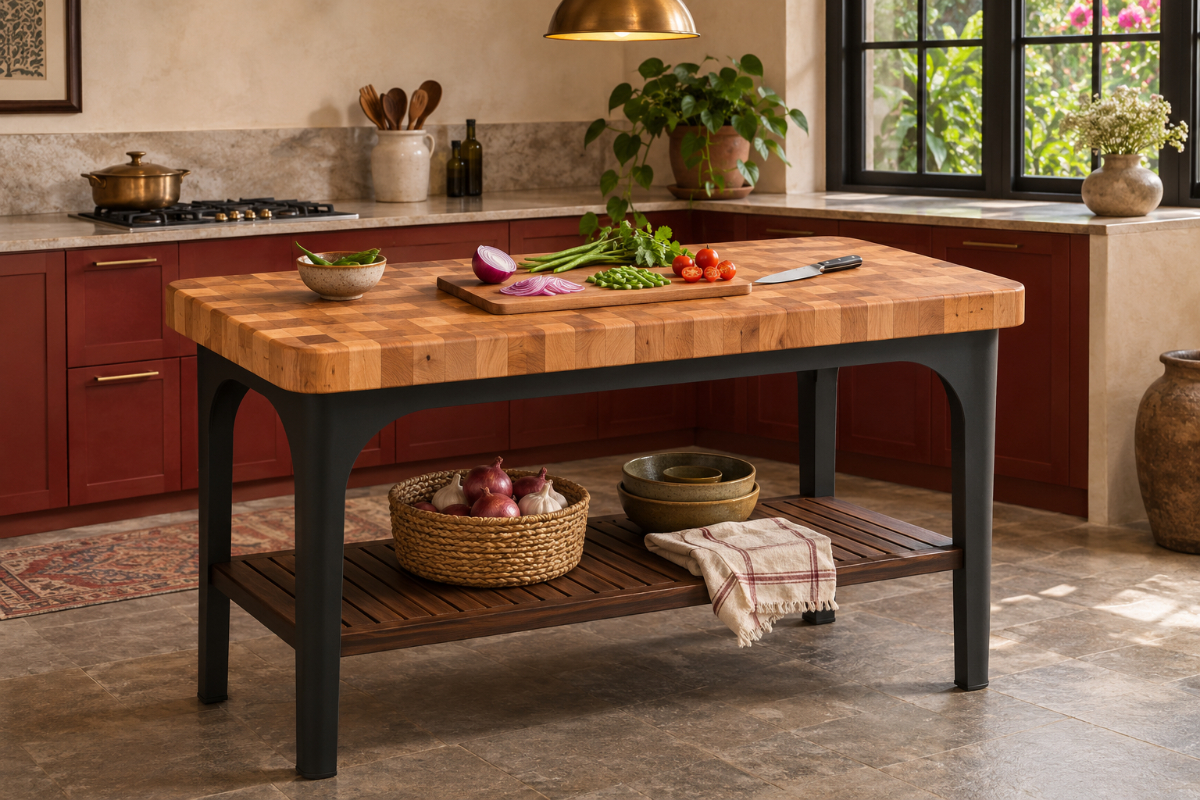
It is, provided the top material is chosen for prep rather than appearance.
Solid hardwood and butcher block are the traditional food prep table surfaces, tolerating knife work and taking oil treatment well. They need resealing annually in Indian humidity.
Stainless steel is the most hygienic food prep table option and the standard in commercial kitchens. It scratches visibly but cleans completely, which matters more.
Avoid marble for heavy prep. It stains from turmeric and etches from lemon, both constants in Indian cooking.
Whatever the top, the frame needs weight. A light table slides across tile when you knead dough or pound spices.
Multi-Use Table Functions Beyond Cooking
A multi-use table in the kitchen rarely stays a prep surface only.
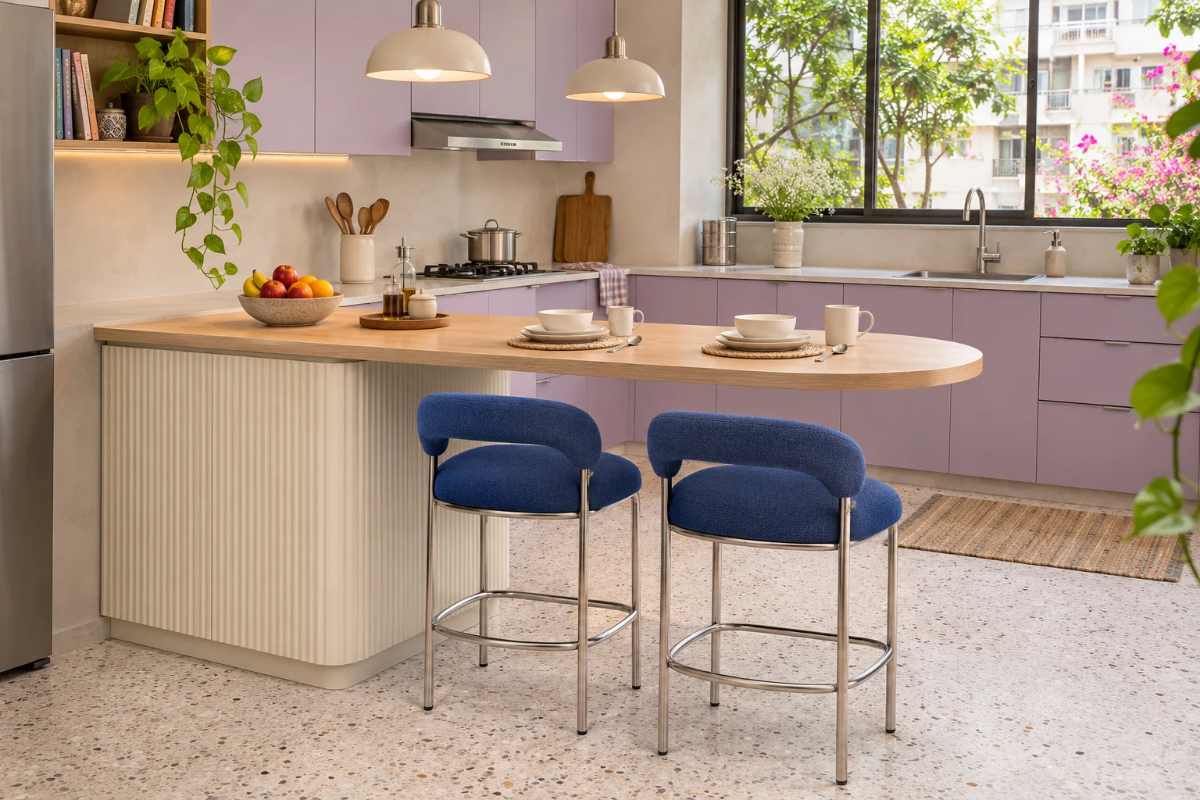
It becomes a breakfast counter with two stools, a homework surface while a parent cooks, and a serving station during festivals when the dining table is full.
For the breakfast function, allow a 25-30 cm overhang on one side so knees fit under. Without it, seating at a multi-use table is uncomfortable within minutes.
Choose stools that tuck fully underneath. Anything protruding turns the kitchen’s tightest circulation point into an obstacle.
Storage and Mobility Options
Since storage is the weak point, look for formats that recover some of it.
- Open lower shelf: holds bowls, mixers and larger vessels that crowd cabinets.
- Towel rail or hooks: on the short end, keeping cloths off the counter.
- Lockable castors: genuine mobility, locked firmly during prep.
- Drop leaf: extends for festivals, folds down to a narrow profile daily.
Lockable castors are worth insisting on. Unlocked wheels on a prep surface are unsafe, and fixed legs remove the mobility advantage entirely. Background on the fixed format is covered under kitchen island.
Choosing the Right Piece
Decide first whether prep or seating dominates, since that determines both height and top material.
Browse formats in the dining table collection and centre table range, or read our table top materials guide before choosing a surface.