Hotel Lobby Sofa Selection Guide for Interior Designers
TL;DR: A sofa in hotel spaces must survive 10-15 times the use of a domestic sofa. Specify hardwood frames, high-density foam, and upholstery rated above 40,000 Martindale rubs. Lobby, lounge and room seating each need different builds.
Specifying a sofa in hotel projects is a different discipline from choosing one for a home. The piece will be sat on by hundreds of people a week, cleaned aggressively, and expected to look presentable for five years or more.
This guide is written for interior designers, procurement managers and hospitality owners specifying seating for Indian properties.
Why a Sofa in Hotel Spaces Needs a Different Specification
A domestic three-seater is designed for a family of four using it a few hours a day. A sofa in hotel lobbies serves a rotating public with no ownership incentive to treat it gently.
Specifying a sofa in hotel lobbies and lounges? Compare frames, foam density, Martindale ratings and zone-wise seating for Indian hospitality projects.
That single difference drives every specification decision below, and it is why a sofa in hotel projects should never be sourced from a residential catalogue.
The load difference is not marginal. Contract-grade seating is engineered for roughly 10-15 times the cycles of residential furniture, which changes every component in the build.
- Frame: kiln-dried hardwood with corner blocks and dowelled joints, not stapled softwood or engineered board.
- Foam: minimum 40 kg/m3 density for seats. Domestic foam at 25-32 kg/m3 collapses within months.
- Upholstery: rated above 40,000 Martindale rubs. Residential fabric is often certified at 15,000-25,000.
- Fire rating: flame-retardant treatment is mandatory in most Indian hospitality fit-outs.
- Legs: metal or reinforced hardwood, because trolleys and vacuum cleaners strike them daily.
The BIFMA standards body publishes the durability benchmarks most global hospitality specifications reference.
Lobby Seating: What Works and What Fails
Lobby seating carries the property’s first impression and takes the heaviest traffic in the building. Guests arrive with luggage, sit briefly, and leave.
Deep lounging sofas fail here. A guest waiting ten minutes with a suitcase wants a firm seat they can rise from easily, not a soft one they sink into.
- Seat height: 45-48 cm. Lower seats are difficult for elderly guests and those carrying bags.
- Seat depth: 55-60 cm. Deeper seats force a reclined posture that is wrong for transit spaces.
- Firmness: firmer than domestic. Soft lobby seating looks tired within a year.
- Arms: essential. They give guests leverage to stand up.
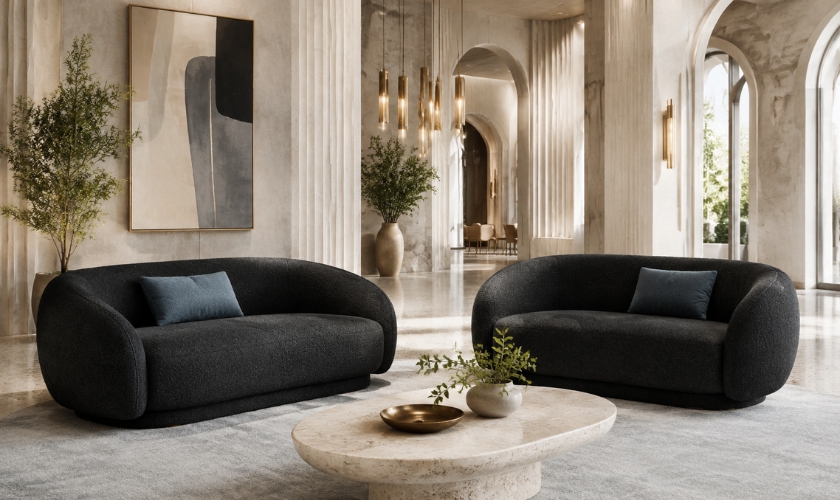
- Configuration: two-seaters and modular units, not large three-seaters that strangers avoid sharing.
Modular lobby seating also solves a practical problem: it can be reconfigured for events without buying new stock.
Commercial Sofa Selection by Hotel Zone
A single commercial sofa specification across the whole property is a common and expensive mistake. Each zone has different demands.
- Lobby: firm, upright, modular, darkest fabric tones. Highest durability rating in the building.
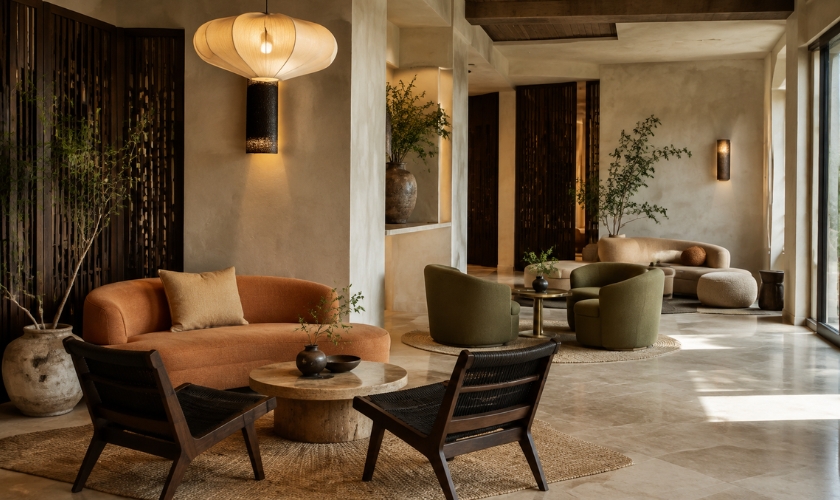
- Lounge and bar: deeper seats, softer feel, banquette or curved forms that define seating pockets.
- Guest rooms: compact two-seaters or single lounge chairs. Space efficiency outranks statement design.
- Suites: residential-feel sofas in premium materials, since usage cycles are far lower.
- Business centre: upright commercial sofa builds with power outlets integrated where possible.
Budget should follow traffic, not visibility. The lobby and lounge deserve the highest per-unit spend because they wear fastest.
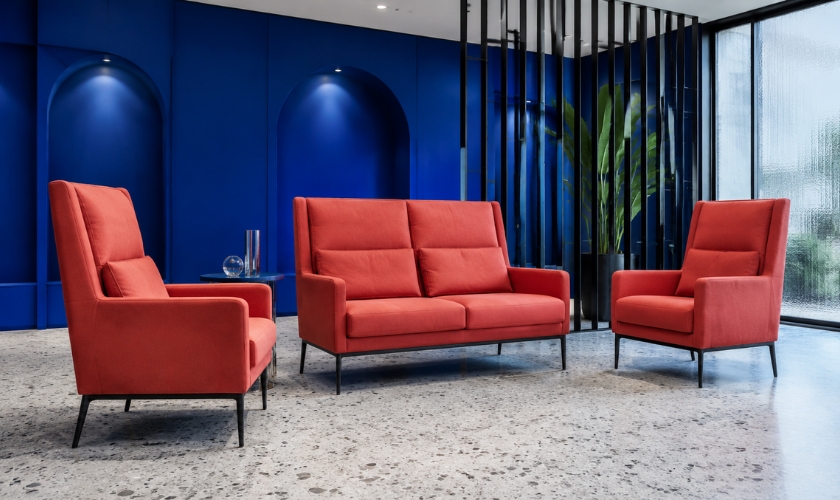
Hospitality Furniture: Fabric and Leather Decisions
Fabric choice determines how the seating ages more than any other single decision in hospitality furniture procurement.
Vinyl and bonded leather are common in Indian hotel fit-outs on cost grounds. Both fail early — bonded leather delaminates in humidity within two to three years.
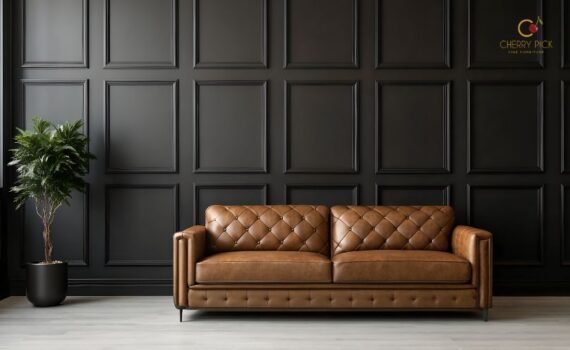
Genuine leather performs well in lobbies because it wipes clean instantly and ages into a patina rather than looking worn. The trade-off is upfront cost and heat retention in unconditioned spaces.
Performance woven fabric is the balanced choice for most hospitality furniture programmes. Modern treated weaves clean easily, resist staining, and cost considerably less than genuine leather.
Whatever the material, specify removable and replaceable seat covers. The ability to replace a single damaged cushion cover instead of reupholstering an entire sofa transforms the maintenance economics.
How Does Hotel Interior Design Affect Sofa Choice?
Hotel interior design sets the visual brief, but the specification must survive it. The most common conflict is a designer specifying a pale fabric that photographs beautifully and greys within eight months.
Mid-tone and darker fabrics are the pragmatic answer in high-traffic zones. Reserve pale tones for suites and low-traffic lounges where usage is lighter.
Scale is the second hotel interior design consideration. Lobby ceilings are high, so seating that looks generous in a showroom often reads undersized in situ. Specify one size up from instinct.
Finally, plan for replacement. Order 5-10% spare units at the time of the original purchase. Fabric batches change, and matching a discontinued line three years later is usually impossible.
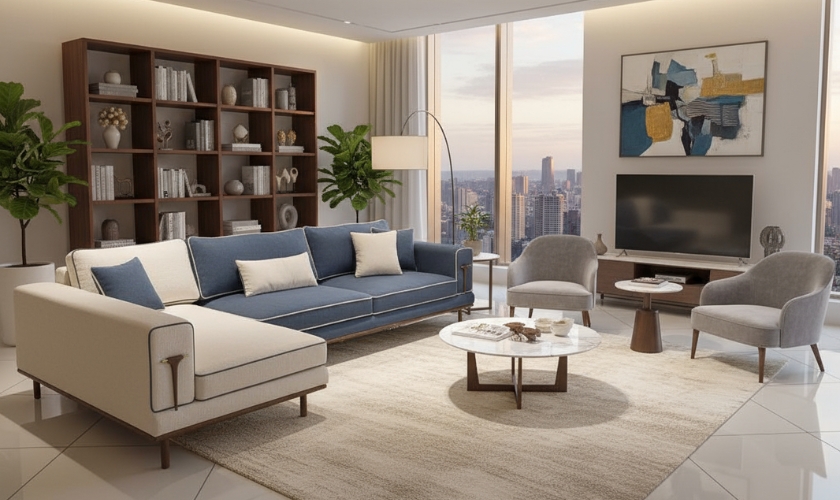
Sourcing Hotel Furniture and Commercial Sofa Units in Bangalore
Bangalore’s hospitality sector — business hotels, boutique properties and serviced apartments — has driven demand for hotel furniture that meets international contract specifications.
Lead times matter as much as specification. Custom-built hotel furniture typically runs eight to twelve weeks, so a sofa in hotel fit-out schedules should be ordered before the finishing trades begin.
When evaluating a supplier, ask for foam density certificates, Martindale test reports and frame warranty terms in writing. A supplier who cannot produce these is quoting on domestic stock.
Cherry Pick India supplies imported and custom-built seating for hospitality projects across Bangalore, including bulk and phased orders. Browse the leather sofa range and fabric sofa range, or read our guide on selecting the right sofa set.
For project enquiries, the Koramangala showroom holds contract-grade samples that can be specified with custom dimensions, fabrics and finishes.