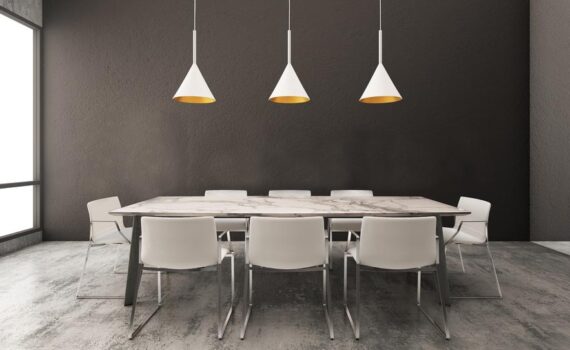
Fine Dining Table Setup: Restaurant-Style Home Dining
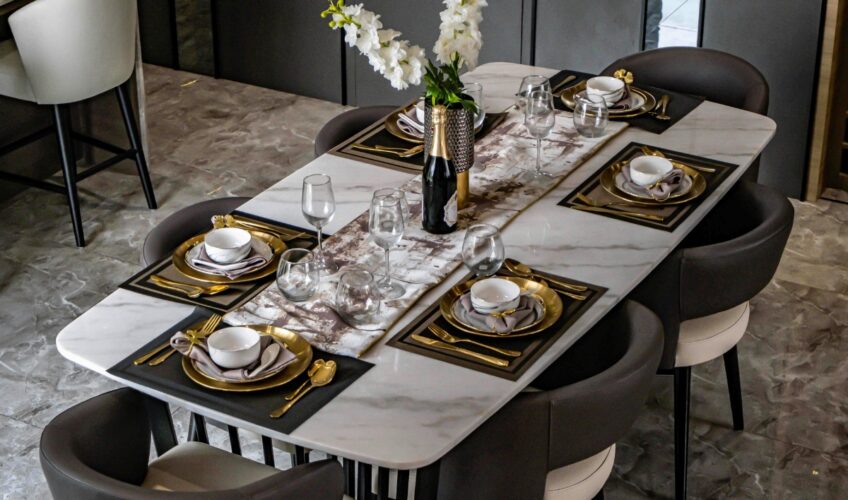
TL;DR: A fine dining set up follows a fixed logic: cutlery works outside-in, glasses sit above the knife, and everything is spaced one thumb-width from the table edge. Learn the order once and it applies to every formal meal.
A fine dining set up looks complicated because there are many pieces. The underlying rules are simple, and there are only four of them.
Once you know the logic, you can lay a table for any occasion without looking anything up.
The Four Rules of a Fine Dining Set Up
Every formal arrangement follows the same structure, whatever the cuisine or course count.
A fine dining set up follows four rules: cutlery outside-in, forks left, glasses above the knife, one thumb-width spacing. Adapted for Indian meals.
- Outside-in: cutlery is used from the outermost piece inward, course by course.
- Forks left, knives right: knife blades always face inward, toward the plate.
- Glasses upper right: positioned above the knife, in a diagonal line or small cluster.
- One thumb-width: the base of every piece sits that distance from the table edge.
That fourth rule is what separates a fine dining set up from an approximate one. Aligned bases read as deliberate; uneven ones read as careless, even when the pieces are correct.
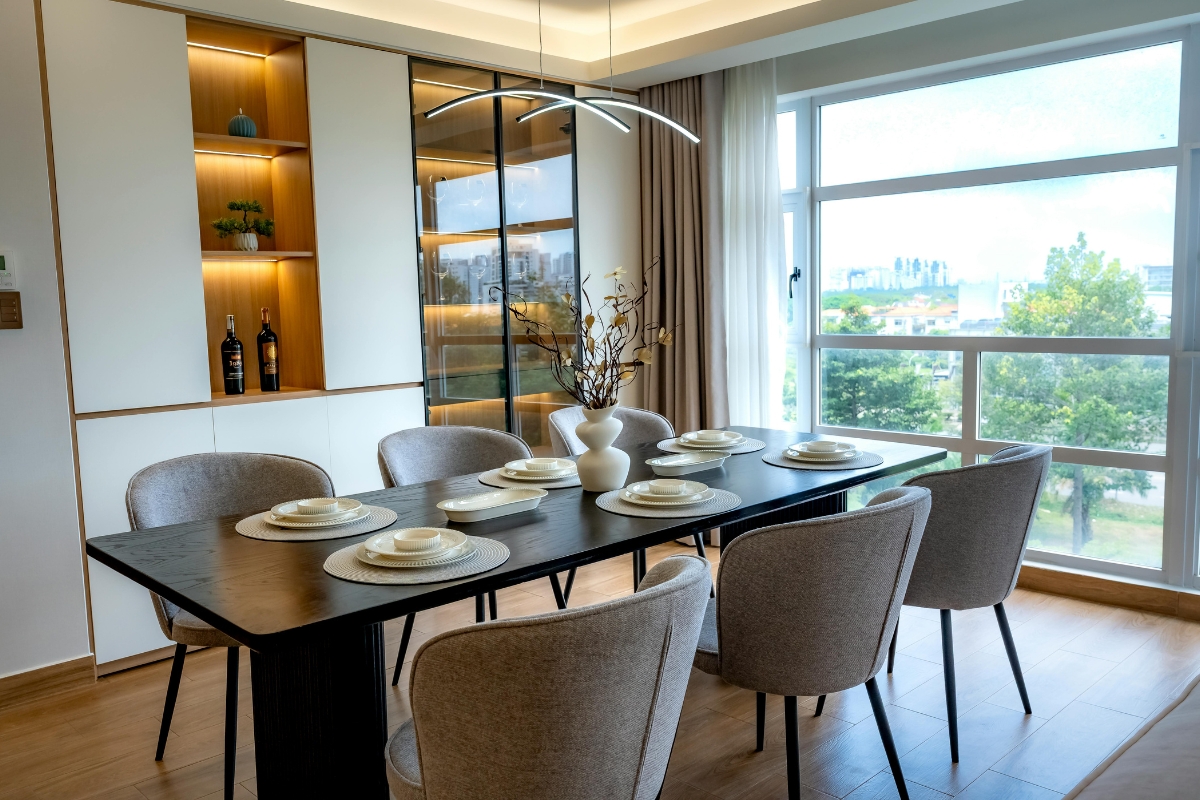
Formal Dining Layout, Piece by Piece
Working outward from the centre, a formal dining cover is built in a fixed order.
The charger or service plate sits at the centre, with the dinner plate on top of it. The napkin goes on the plate or to the left of the forks, never under them.
To the left, forks are laid in reverse course order. To the right, knives sit with blades inward, and the soup spoon takes the outermost right position.
Dessert cutlery lies horizontally above the plate, with the fork pointing right and the spoon pointing left.
Glassware in an Elegant Table Setting
Glasses are where an elegant table setting most often goes wrong, because the positions are less intuitive than cutlery.
- Water glass: directly above the dinner knife. This is the anchor position.
- Red wine: to the right of the water glass, slightly lower.
- White wine: to the right of the red, continuing the diagonal.
- Spacing: glasses should not touch. A finger-width between each is correct.
For a non-alcoholic elegant table setting, keep the water glass in its anchor position and add a single juice or mocktail glass to its right. The geometry stays the same.
Dinner Party Setup for Indian Meals
Formal Western covers assume plated courses. Indian meals are served family-style, which changes the dinner party setup meaningfully.
Reserve more centre space. Serving dishes land in the middle throughout the meal, so the decorative centre must be narrow or removable.
Add a quarter plate to the upper left of each cover for rotis and accompaniments. Include a katori or two if the menu calls for them, positioned to the upper right of the dinner plate.
A successful dinner party setup for Indian food prioritises reach. Every guest should be able to serve themselves without standing, which caps comfortable table width at around 100 cm.
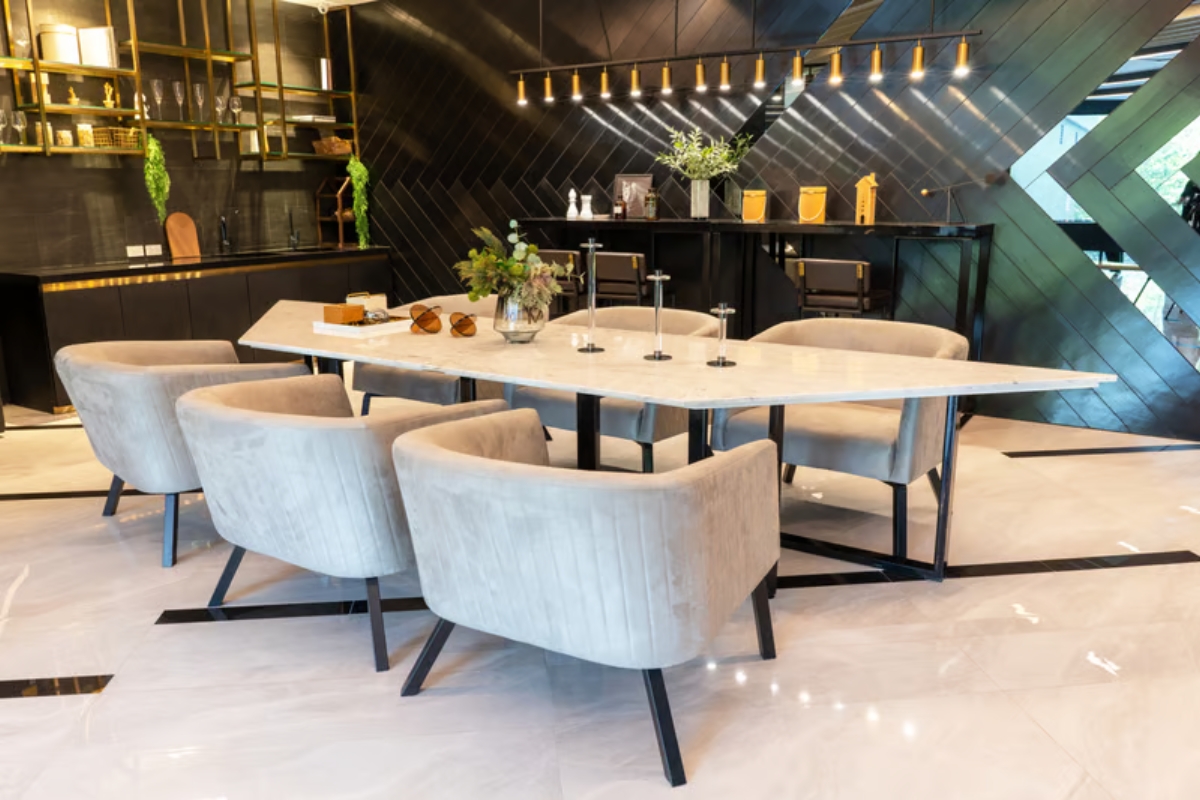
What Is Correct Table Etiquette for Guests?
Table etiquette exists to remove uncertainty, not to create it. Four conventions cover almost every situation.
Work outside-in and you cannot pick the wrong piece. Place the napkin on your lap once seated, and on the chair if leaving temporarily.
Signal you have finished by placing cutlery together at the four-o’clock position on the plate. Resting them apart signals you are still eating.
Bread and side plates belong on your left, glasses on your right. Remembering that one detail prevents the most common table etiquette confusion at a crowded table.
Spacing and Table Size
A formal cover needs more room than a casual one, and crowding undoes an otherwise correct arrangement.
- Per person: allow 60-70 cm of table edge for a formal cover.
- Table width: 90-100 cm allows a centre run without crowding the covers.
- Chair clearance: 90 cm behind each chair for pulling out and passing.
- Centrepiece height: under 30 cm so sightlines stay open across the table.
These measurements decide whether a fine dining set up is even possible in your room. A six-seater formal arrangement needs a table of at least 180 cm.
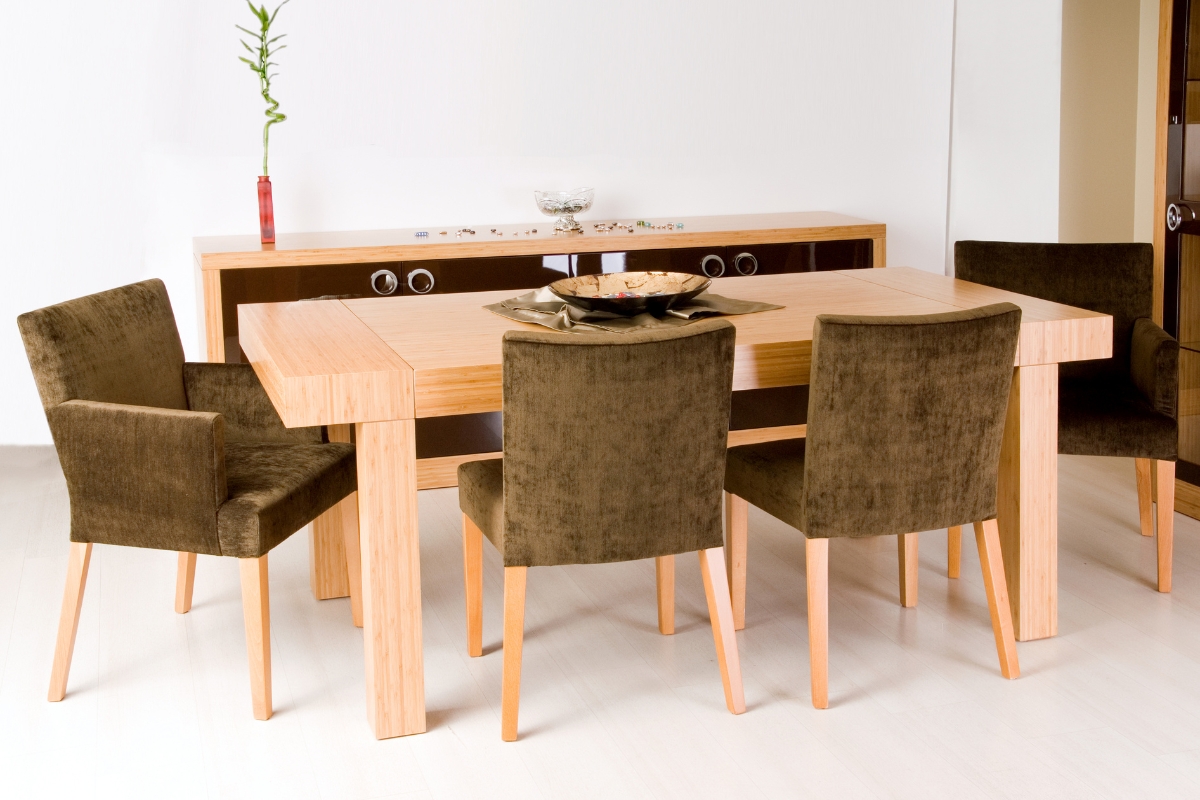
Adapting Formality to the Occasion
Full formality is rarely necessary. Most home occasions call for a reduced version of the same structure.
For a three-course dinner, one fork, one knife, one spoon, a water glass and a napkin is entirely sufficient, laid to the same spacing rules.
Conventions vary by region and tradition, and the table manners overview covers the wider picture.
Browse formats in the dining table collection and dining chairs range, or read our guide to dining table arrangements.[/vc_column_text][/vc_column]